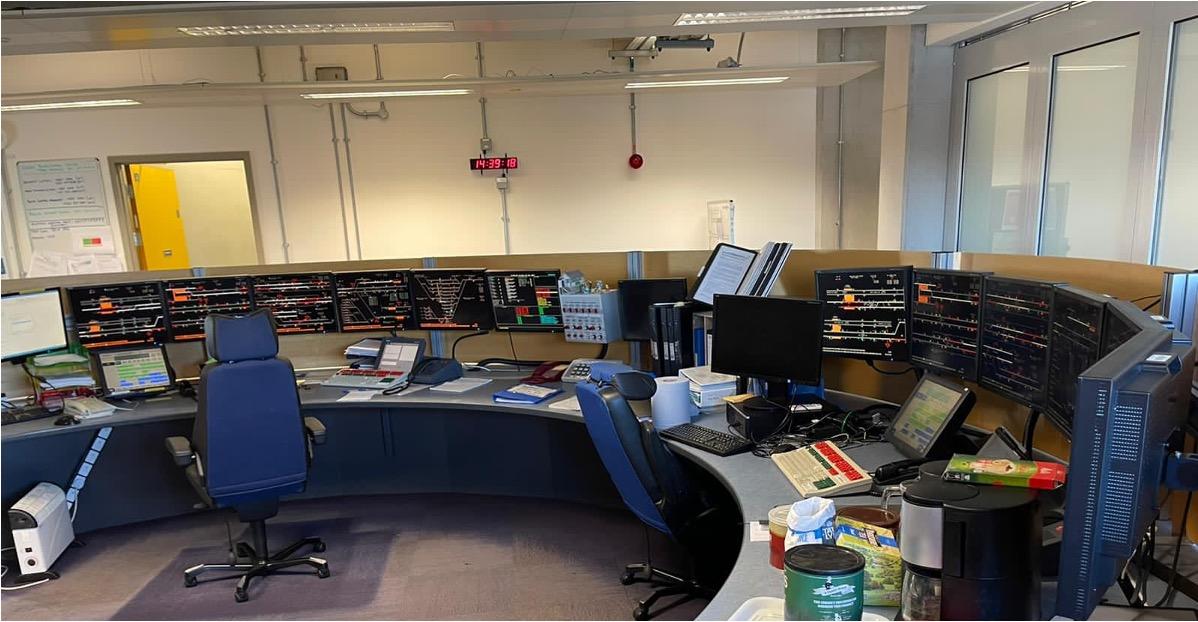
East London Line Signalling DRS (Grip 3)
Project Overview
Cleshar was contracted to undertake the GRIP 3 Option Selection Phase for the replacement of obsolete and life expired Video Signalling Control Systems (VSCS), Automated Routesetting Facility (ARF) and Train Describer (TD) equipment at the New Cross Gate Operational Building Complex (NXG OBC). This included the Junction Routesetting System (JRS) and Automated Platform Working (APW). They were to be replaced with a modern Signalling Control System (SCS) incorporating Dynamic Route Setting (DRS) and Timetable Processing (TTP).
Scope of Works
Main works included the identification, technical evaluation, tendering, and support to London Overground (LO) in the option selection of a proprietary signalling control system to support ARF to DRS renewal of the existing WESTCAD and TD modules in the Signalling Equipment Room (SER) at the New Cross Gate Operational Building Complex (NXG OBC). This included:
- Recovery/replacement of existing Compact PCI (cPCI) Mk2 WESTCAD and train describer housings/cubicles in the SER.
- Renewal of signaler workstation monitors and introduction of beneficial improvements as agreed with operations staff.
- Recovery of the ACIF terminal and technician’s terminal and provision of equivalent maintenance technician facilities.
- Renewal of the interlocking simulator used to train the signallers.
- Passive provision for future install of dynamic conflict resolution (DCR) functionality to calculate a conflict-free dynamic timetable for the DRS by monitoring the current area of control and detecting possible conflicts in the operating sequence.
- Transfer of signalling control between the compact peripheral component Interconnect (cPCI) Mk2 WESTCAD housings/cubicles in the SER to a new modular control rack (MCR) based solution, including changeover housings and video switching as required.
- Any supporting alterations identified re data cabling, connectors and terminations, telecoms lines i.e., in the main distribution frame (MDF) are to be captured as required (for works in the ICR or Equipment Rooms or between them).
- New, updated, or revised operating, management or maintenance procedures tailored to the new VSCS selected.
- Review options for automatic timetable download to a Layered Information Exchange (LINX) Gateway or dedicated virtual private network connection to the NR Integrated Train Planning System (ITPS), to obviate manual timetable loading, as the signalers are required to do currently.
Innovations
A bespoke interface to automatically download timetable information from the Network Rail (NR) Integrated Timetable Processing System (ITPS) into a new signalling server was identified by CCS during the stage. This involved the additional use of data (.cif files) already received at the NXG OBC for the ELL Customer Information System Local Information Control Centre (LICC) with minimal changes to infrastructure required and high network resilience. Should LO adopt this approach going forward, it will remove the existing requirement for operational staff to manually load timetable information to the DRS routing at comparatively low cost.
Benefits / Project Outcome
- CCS successfully developed the client requirements (technical, operational & logistical), produced Tender documentation, and identified multiple appropriate/compliant market options capable of meeting the LO (ELL) application. CCS personnel formed part of the tender evaluation team and provided specialist advice/guidance to support LO in option selection.
- Fully programmed and costed technical options to deliver the ELL VSCS renewals were offered, that covered all residual project life-cycle stages and activities including survey, design, installation, testing, changeover strategy, entry-into-service, recoveries, and any temporary works as identified by potential subcontractors.
- Evaluation criteria were specifically defined to highlight best value commercial and technical solutions to LO.
- An exhaustive set of risks faced undertaking the design, implementation and handover works was identified, with mitigation plans. This included operational, reputational, or technical risks for any key stakeholder i.e., LO, CCS, NR or SFO/TOCs.
- The project applied the Common Safety Method for Risk Evaluation and Acceptance (CSMRA) as prescribed by European/UK legislation and in line with LO/NR Engineering Safety requirements i.e., Specific Application Safety Case (SASC) preparation.
- Compliance was maintained to the RfL safety authorisation process with appropriate peer reviews of processes/products.
- Any new or potentially changed risks were identified and mitigated via Hazard Identifications (HAZID) processes.
- Recommendations were made for bespoke ergonomic studies re: signallers in accordance with NR/TfL standards.
- New, updated, or revised operating, management or maintenance procedures were identified, specifically tailored to the ELL.
- All briefing and consultation of project requirements was undertaken with key stakeholders such as NR, LO and TOC’s who inputted into the Concept of Operations (ConOps), client requirements document (CRD) and operational requirements specification (ORS). Close liaison with all parties was maintained and their inputs informed future project direction.
- As infrastructure owner for affected assets, full engagement with Network Rail and adherence to their approval policies was prioritised. Staff from NR formed part of the integrated team delivering the works.
- The safety integrity level of the new application was verified by the project via SIL assessments. All Suppliers of VSCS replacement systems were required to verify that their offering meets the SIL requirement.