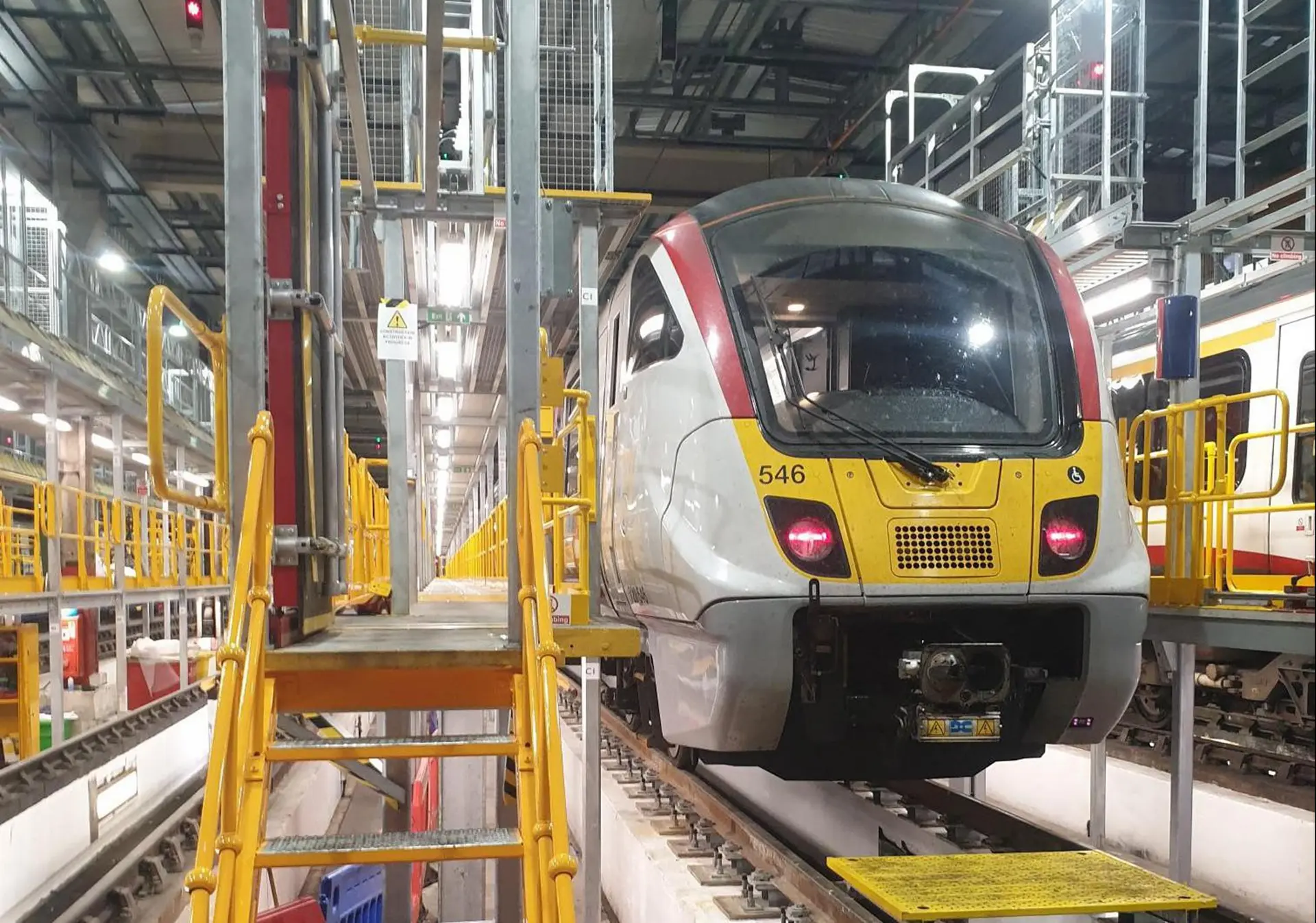
Ilford Depot
Project Overview
The Ilford Depot project formed part of the Improvement Plan to fulfill Greater Anglia’s new franchise commitments. Greater Anglia replaced its entire fleet of trains at the end of 2020 with the new Alstom Class 720 fleet. This new fleet will be serviced and maintained at Ilford Depot. The purpose of the new gantries installed on road 11 to 14 was to ensure Greater Anglia had suitable and sufficient facilities to operate and maintain this new fleet of trains.
Scope of Works
Our scope of works comprised supplying four access gantries on roads 11 to 14. All works were carried out within a live depot environment on a 24-7 basis and with no serious incident over the 2-year project.
Initial Site Surveys and various design assurance validation surveys:
• Topographical, structures condition and services dilapidation surveys
• GPR Surveys and tag and trace surveys
• Clear route analysis track surveys vs design
Site works
The initial construction aspect consisted of both intrusive and non-intrusive surveys, to identify all existing services and any hazardous materials that might be present due to the age of the depot building, i.e, asbestos. Following the release of the AFC Designs from Greater Anglia’s Designer SNCL, the civils aspects of the works was carried out with the installation of the recessed RC gantrybases using a Brokk excavator.
These works were implemented in a controlled environment to manage both sound suppression from the heavy plant and potential asbestos findings through the excavation process. The 750 linear meres of gantries across all roads were installed using various types of access equipment, mainly RRV plant provided by our supplier Total Rail Solutions.
The structural aspect of the design consisted of our supplier AV Birch Manufacturing the gantry sections in kit form offsite at their factory, then delivering to site as per the agreed sequencing schedules.
Also, the M&E aspect of the gantries ran concurrently with the gantry installation to ensure key dates set out in the programme were achieved. The scope of works from an electrical aspect consisted of the installation of luminars, power sockets and a depot protection system on all levels across the four gantries.
Upon completion of each gantry, our various CRE’s signed off the F005’s certificates of completion for each discipline as part of the assurance process and in line with the relevant Network Rail Standards.
Track gauging surveys were also carried out on all the roads to validate the track clearances vs design, including Clear Route Analysis. Currently, our site team are collating the various handover packs in line with the guidelines set out in the MS18.09 Handover Process, in accordance with our contract obligations.
Innovations
• During the development of the GRIP 4-5 Cleshar influenced the design from a construction perspective with the support of the various discipline CREs and our Construction CEM. Several interim design workshops were implemented through the GRIP 4-5 lifecycles as to expediate the IDC/IDR meetings, thus leading to AFC designs.
• Gantry installation constraints within working in a live 24-7 depot i.e., off- site assemble of sectional components of the gantries, just in time deliveries due to storage constraints.
• Pre-galved gantry components from our suppliers as to expediate the manufacturing process.
Benefits / Project Outcome
Our approach led to the following:
• Reduced overall programme hitting key milestone dates.
• A reduction in interphase with the depot staff due to offsite fabrications.
• Reduction in RRV usage resulting in environmental savings i.e., emissions and fuel savings.
• Early handover over of assets to the depot team due to ongoing stakeholder management.
• Our early involvement in design development
with Greater Anglia’s designer SNCL.
• No delays were experienced, and the project programme was achieved for the introduction of new 5-car trains.
The project was successfully delivered in time, mainly from Cleshar forming a collaborative relationship with our client Greater Anglia and the various stakeholders within the project. Weekly stakeholder meetings were held at the depot to identify and address any issues which had potential to delay the planned completion.